




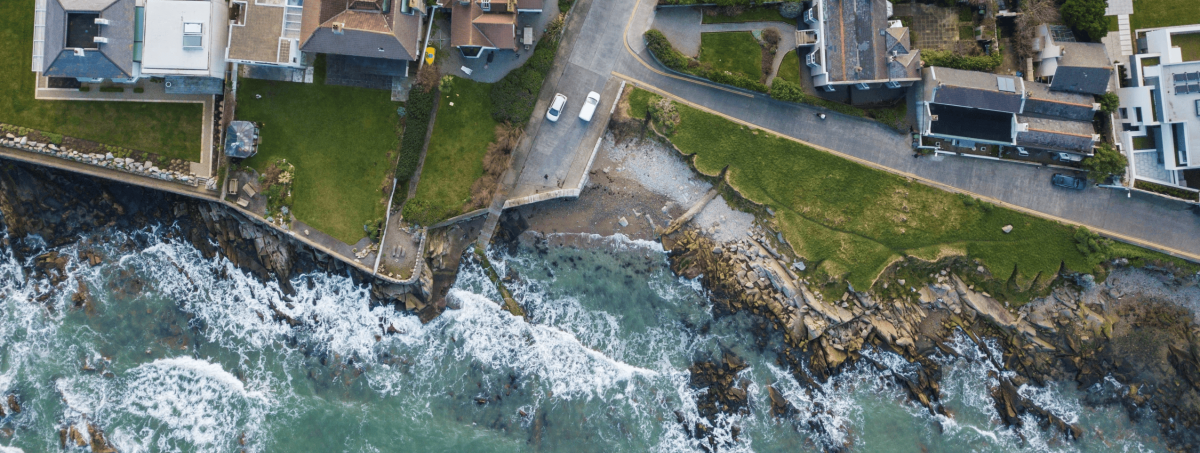
New research examining Ireland’s coastal resilience challenges is highlighting how climate adaptation is becoming an increasingly important consideration for infrastructure owners, facilities operators and asset managers across the UK and Ireland.
A report prepared for the Climate Change Advisory Council, Managing Coastal Risks in Ireland, argues that traditional approaches focused primarily on building and maintaining flood defences may no longer provide a sufficient long-term response to changing climate conditions. Rising sea levels, increased storm intensity and accelerating coastal erosion are creating new pressures for organisations responsible for maintaining critical infrastructure.
Ireland’s coastline stretches more than 7,500 kilometres and supports a wide range of infrastructure including water and wastewater assets, pumping stations, treatment facilities and transport connections. Many of these systems operate in low-lying or exposed locations where climate-related risks are expected to increase over time.
The report recommends a move towards adaptive pathways planning, an approach that allows organisations to sequence interventions and adjust investment decisions as environmental conditions evolve. Rather than committing to one fixed long-term solution, infrastructure operators can establish decision points that support upgrades, nature-based interventions, land-use changes or alternative resilience measures when required.
For facilities and infrastructure leaders, the implications extend beyond flood barriers. Climate exposure can affect building performance, maintenance requirements, equipment reliability and operational continuity. Water treatment facilities, sewer networks and energy-dependent infrastructure may become increasingly vulnerable to disruption from flooding, storm surges and changing environmental conditions.
The report also identifies opportunities for nature-based approaches including dune restoration, saltmarsh protection and natural coastal buffers. While these measures are unlikely to replace engineered solutions in highly developed areas, they may complement traditional infrastructure and improve overall resilience outcomes.
For organisations managing long-life assets, the findings reinforce the importance of integrating flexibility into investment and maintenance planning. Infrastructure expected to operate for decades may face conditions very different from those assumed during initial design.
As climate risks become a larger consideration across public and private estates, resilience planning is increasingly moving from a long-term aspiration to an operational priority shaping facilities strategy and infrastructure investment decisions.
Continue reading for more insights on climate resilience and infrastructure planning.




















.png)

